
Advances in dental materials and restorative techniques have broadened the ways we replace missing teeth. Fixed solutions such as dental implants and bridges offer excellent long-term stability for many patients, but removable dentures remain a practical, adaptable option for rebuilding a natural-looking smile. When designed and fitted thoughtfully, modern dentures restore function, support facial contours, and help people feel more confident every day.
At the office of Vaccaro Aesthetic and Family Dentistry, we combine clinical experience with modern prosthetic methods to create dentures that prioritize comfort, fit, and appearance. Our approach focuses on individualized care: assessing oral health, discussing your daily needs, and recommending the type of denture that best meets both functional and aesthetic goals.
Our goal is to help patients make informed choices about tooth replacement. Below you’ll find an in-depth look at why tooth replacement matters, how removable dentures work, the different styles available, and what to expect throughout treatment and daily wear.
Losing teeth affects more than just your smile. Teeth play a key role in chewing, speaking, and maintaining the position and health of surrounding teeth and bone. When one or more teeth are missing, the way forces are distributed during biting changes, which can lead to uneven wear, shifting teeth, and bite problems over time.
Beyond mechanics, tooth loss can change facial support. Without the presence of teeth or a prosthetic substitute, the jawbone gradually remodels, which may cause the cheeks and lips to appear sunken. Replacing missing teeth helps restore a natural facial profile and can reduce the long-term effects of bone remodeling.
Addressing tooth loss sooner rather than later often yields a better functional outcome. Replacing teeth helps maintain your ability to eat a varied diet, improves speech clarity in many cases, and prevents neighboring teeth from drifting into open spaces. A well-made denture is an effective way to manage these concerns when a removable solution is appropriate.

Removable dentures are prosthetic devices that replace missing teeth and the surrounding gum tissue. They consist of artificial teeth set into a base that sits over the gums; materials and tooth shapes are chosen to mimic natural teeth and blend with your facial features. Because they are removable, dentures can be taken out for cleaning and overnight rest.
One of the strengths of removable dentures is their versatility. Partial dentures restore a few missing teeth while preserving remaining natural teeth; full (complete) dentures replace an entire upper or lower arch. Dentures can also be designed to work with existing teeth or with dental implants to improve stability and retention.
Although removable by design, modern dentures are created with careful attention to fit, occlusion (bite), and esthetics. Properly made dentures can restore comfortable chewing, support clear speech, and help you smile with confidence. Periodic adjustments and maintenance help ensure longevity and ongoing comfort.
Choosing the right denture depends on the number of missing teeth, the condition of the remaining teeth and gums, and your personal preferences for maintenance and function. A thorough clinical exam and discussion of your goals are essential to select the most suitable prosthetic approach.
Dentures broadly fall into two removable categories: full (complete) dentures and partial dentures. A full denture replaces all teeth in an arch, while a partial replaces only selected missing teeth and uses the remaining teeth for support and retention. Each approach has design choices that affect how the denture looks and functions.
Complete dentures replace an entire arch of teeth and are available in different timing strategies. A conventional complete denture is fabricated after existing teeth have been removed and tissues have healed, which often produces a more stable long-term fit. Conversely, an immediate denture is placed right after extractions so the patient is never without teeth while healing occurs; it may require adjustments or relining as tissues change.
Overdentures sit over remaining tooth roots or attachments and provide enhanced support and proprioception compared with traditional dentures. When implants are placed, an implant-supported denture attaches to those implants for superior stability and reduced movement during function. These hybrid solutions are beneficial for patients seeking added retention while maintaining a removable prosthesis.
Immediate Denture
An immediate denture allows you to leave the dental office with a complete set of teeth the same day extractions are performed. This approach prevents gaps during healing but commonly requires follow-up adjustments as tissues shrink and reshape.
Overdenture
An overdenture gains extra support by relying on preserved tooth roots or attachments. When well planned, this option preserves jawbone and can improve the stability and tactile feedback of the prosthesis.
Implant-Supported Dentures
Dentures that connect to dental implants offer increased retention and chewing efficiency. Depending on the case, implants may secure either a removable overdenture or a fixed prosthesis, giving patients more options for comfort and function.
Partial dentures replace one or several missing teeth and are fabricated using a variety of frameworks and attachments. Traditional metal-based frameworks are durable and precise, while newer flexible and resin-based materials can provide a more discreet profile and patient comfort in certain cases.
Partial dentures also help preserve the position of adjacent teeth, preventing unwanted drifting and preserving bite relationships. The design of clasps, rests, and connectors is individualized to distribute forces evenly and maintain oral health.
No matter the material or design, the objective remains the same: restore chewing ability, support facial appearance, and maintain the health of remaining teeth and tissues. Your clinician will recommend the design that best aligns with your oral condition and lifestyle.
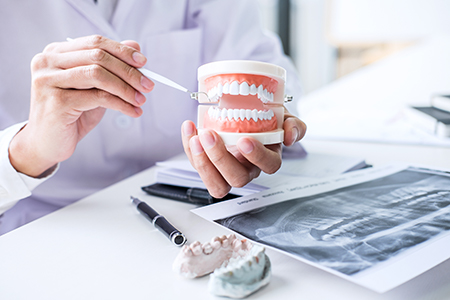
Effective denture therapy starts with thorough assessment. We review medical and dental history, examine the health of gums and remaining teeth, and use diagnostic imaging where appropriate. This evaluation identifies any preliminary treatments—such as extractions, periodontal care, or minor tissue reshaping—that may improve the final fit and comfort of your denture.
Designing a denture is a multi-step process that combines precise impressions, careful jaw records, tooth selection, and trial fittings. Technicians and clinicians work together to match tooth shape, color, and alignment to your facial features and expectations. Each step is an opportunity to refine fit and function before the final prosthesis is delivered.
When necessary, pre-prosthetic procedures optimize the shape of the ridge and supporting tissues for a better outcome. Whether you receive a conventional denture, an immediate prosthesis, or an implant-assisted restoration, communication and iterative adjustments are key to achieving a comfortable, natural result.

Adjusting to a new denture usually takes a few weeks. During this time you may experience increased salivation, minor speech changes, and areas of pressure. These reactions are normal and often subside as you and your denture adapt. Simple exercises — like reading aloud or practicing chewing with softer foods — can speed comfort and confidence.
Getting comfortable with speech and chewing
Start with soft, manageable foods and cut items into smaller pieces. Chew slowly and use both sides of your mouth when possible. For speech, practicing common phrases and reading aloud can help your tongue and lips learn the new contours created by the denture.
Hygiene and overnight care
Clean your dentures daily with a brush designed for prosthetics and rinse them after meals. Brush any remaining teeth and massage your gums to maintain tissue health. When not wearing dentures, keep them moist in water or a recommended soaking solution and remove them at night to allow tissues to rest.
Using adhesives and seeking added retention
Denture adhesives can enhance retention for some wearers, while implant attachments provide a more secure mechanical connection for others. Your clinician will discuss retention options based on tissue anatomy, function, and personal preferences.
Follow-up appointments and relines
Regular checkups let us evaluate fit, wear, and oral tissue health. Over time, tissue changes may necessitate relines or adjustments to maintain comfort and function. Timely follow-up care helps prevent soreness and prolongs the usefulness of your denture.
At the office of Vaccaro Aesthetic and Family Dentistry, we focus on creating practical, comfortable denture solutions tailored to each patient's needs. If you would like more information about denture options or the steps involved in treatment, please contact us for a consultation and personalized guidance.


Removable dentures are prosthetic devices that replace missing teeth and the surrounding gum tissue. They consist of artificial teeth set into a shaped base that rests on the gums and can be taken out for cleaning and rest. Properly designed dentures restore chewing function, support facial contours, and help improve speech clarity.
Materials and tooth shapes are chosen to mimic natural dentition and blend with your facial features while maintaining durability. Fit is established through careful impressions and bite records so occlusion and comfort are balanced. Periodic adjustments and professional evaluations ensure ongoing performance as oral tissues change over time.
Full dentures replace an entire upper or lower arch when all natural teeth in that arch are missing, while partial dentures replace one or several missing teeth and use remaining teeth for support. Full dentures rely on tissue support and careful design to maximize suction and stability on the ridge. Partial dentures incorporate clasps, rests, or precision attachments to share forces with the natural teeth and preserve space relationships.
The choice between full and partial prostheses depends on the number and distribution of missing teeth and the health of remaining oral structures. Many partial designs are removable and can be fabricated with metal, flexible resin, or acrylic frameworks. A clinician will recommend the design that best balances aesthetics, function, and long-term oral health.
An implant-supported denture connects to dental implants placed in the jaw to provide increased retention and stability compared with conventional tissue-supported dentures. Implants can anchor a removable overdenture or support a more fixed prosthesis, improving chewing efficiency and reducing movement during function. This approach often enhances patient comfort and confidence while preserving jawbone through functional stimulation.
Candidates for implant-supported dentures should have adequate bone volume and good overall health, although bone grafting or other preparatory procedures can often expand eligibility. A clinical exam and imaging help determine implant number, position, and implant type best suited to each case. Your dentist will review medical history, oral health, and treatment goals to create a personalized plan.
An immediate denture is placed at the time of tooth extraction so the patient leaves the office with a full set of teeth during the healing period. This option prevents a visible gap during recovery but often requires follow-up adjustments as tissues shrink and reshape. Immediate dentures can usually be relined or adjusted to improve fit as healing progresses.
During the first weeks you may experience changes in retention and pressure points as swelling decreases and the ridge remodels. Your clinician will schedule follow-up visits to monitor healing and make necessary modifications to the prosthesis. With timely care and possible relining, the denture can be converted to a more stable, long-term solution.
New dentures commonly change the oral contours that help form certain sounds and guide food while chewing, so temporary speech changes and adjustments are normal. Most patients adapt within a few weeks by practicing speaking aloud, reading passages, and using slow, deliberate speech when needed. Chewing initially works best with softer foods cut into smaller pieces while you learn to coordinate chewing on both sides of the mouth.
Gradually introduce firmer foods as comfort and confidence improve, and avoid biting directly into very hard or sticky items until you are fully adapted. Using adhesives or considering implant support can enhance retention when appropriate and improve function. If persistent difficulty with speech or eating occurs, a follow-up visit will help identify pressure areas or occlusal issues that can be corrected.
Daily denture care includes removing and rinsing the prosthesis after meals, brushing it gently with a denture brush and nonabrasive cleanser, and soaking it overnight in water or an appropriate soaking solution. Avoid hot water, which can warp acrylic bases, and never use regular toothpaste with abrasive particles that can scratch denture surfaces. While dentures are out of the mouth, brush remaining natural teeth, gums, tongue, and palate to maintain tissue health.
Handle dentures carefully to avoid dropping and inspect them regularly for cracks, wear, or loose teeth. Bring your dentures to routine dental appointments so fit, occlusion, and tissue condition can be evaluated professionally. Proper daily hygiene and scheduled checkups prolong function and reduce the risk of irritation or infection.
Oral tissues and jawbone naturally change shape over time, so dentures typically need relines or adjustments periodically to maintain optimal fit and comfort. Immediate relines are common after extractions as healing reduces ridge volume, and routine relines may be recommended every few years depending on how tissues remodel. Adjustments are also made to relieve pressure points, correct occlusal contacts, and address functional concerns as they arise.
Replacement is indicated when wear, fracture, substantial dimensional change, or esthetic concerns compromise the denture's performance. Regular dental visits allow clinicians to monitor prosthesis condition and intervene before problems become painful or functionally limiting. If you notice persistent soreness, looseness, or difficulty chewing, schedule an evaluation to determine whether a reline or new prosthesis is needed.
Dentures restore the vertical dimension and tooth support that contribute to facial fullness, which can reduce the sunken appearance that sometimes occurs after tooth loss. By replacing missing teeth, dentures also help distribute biting forces more evenly and prevent adjacent teeth from drifting into empty spaces. When designed to fit well, dentures improve function and can slow the rate of bone remodeling compared with leaving spaces untreated.
Overdentures and implant-assisted options provide additional benefits for preserving bone and proprioception by maintaining stimulation of the underlying ridge. Timely tooth replacement and collaboration with your dental team support long-term oral health and facial esthetics. Regular monitoring ensures that prosthetic design continues to meet both functional and cosmetic goals as conditions change.
Partial denture frameworks can be made from traditional cast metal, which offers strength and precision, or from newer flexible and resin-based materials that may provide improved comfort and a less conspicuous appearance. Acrylic frameworks are common for interim or economical solutions, while metal frameworks are favored for durability and accurate fit in long-term restorations. Tooth replacement teeth come in a variety of shapes, shades, and translucencies so the prosthesis can be matched to your natural dentition.
Design elements such as clasps, rests, and precision attachments are selected to distribute forces evenly and preserve the health of supporting teeth and gum tissue. Your clinician will consider occlusion, esthetic needs, and adjacent tooth condition when choosing materials and retention methods. Thoughtful design maximizes function while minimizing visible hardware in the smile zone.
At the office of Vaccaro Aesthetic and Family Dentistry we begin with a comprehensive assessment that includes medical and dental history, oral examination, and diagnostic imaging when appropriate. Treatment planning focuses on individualized goals, whether the priority is immediate tooth replacement, long-term stability with implants, or a conservative removable solution. Precise impressions, jaw records, and trial fittings guide the fabrication process to achieve a comfortable and natural result.
The team emphasizes communication and follow-up so adjustments, relines, and maintenance are handled proactively to preserve comfort and function. When needed, care is coordinated with specialists such as a periodontist to provide implant options or advanced tissue management without unnecessary referrals. Patients receive instructions for adaptation and home care, along with routine evaluations to keep prostheses performing well over time.

Ready to book your next dental visit or learn more about our services?
Getting in touch with Vaccaro Aesthetic and Family Dentistry is quick and easy. Our friendly team is here to help with scheduling, answering questions about treatments, and addressing any concerns. Whether by phone or our convenient online form, we make connecting with us easy. Take the first step toward a healthier, more confident smile—contact us today and experience personalized dental care that truly makes a difference.

Back to top

