

Being told you need a root canal can feel unsettling, but modern endodontic care is nothing like the old stereotypes. Today’s root canal treatment focuses on relieving pain, removing infection, and preserving as much of your natural tooth as possible — often with the same level of comfort and predictability patients expect from a routine dental filling.
Our goal is to help you make an informed choice about your dental health. At Vaccaro Aesthetic and Family Dentistry, we combine up-to-date techniques with a patient-centered approach so treatments are effective, as painless as possible, and designed to protect the long-term function and appearance of your smile.
Whenever feasible, saving a compromised tooth is usually preferable to extraction. Preserving the natural tooth helps maintain normal chewing function, prevents adjacent teeth from shifting, and supports the long-term health of the jawbone. A well-executed root canal can return a tooth to reliable function for many years.
Root canal therapy addresses the source of pain and infection inside the tooth, allowing you to avoid removable appliances or more extensive restorative work when possible. Retaining a natural tooth often results in a more natural bite and better overall oral health than replacing the tooth entirely.
Advances in instrumentation, imaging, and materials have improved success rates and patient comfort. When performed with careful diagnosis and precise technique, root canal treatment is a predictable way to manage deep decay, injury, or infection while protecting the aesthetics and utility of your smile.

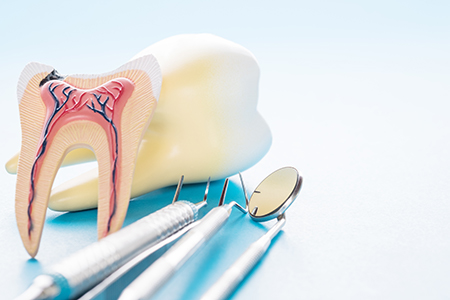
Teeth are more than the hard enamel you see. Inside each tooth is the dental pulp — living tissue that includes nerves and blood vessels that once helped the tooth develop. When the pulp becomes inflamed or infected from decay, trauma, or repeated procedures, it can no longer protect the tooth. That damage is what often makes a root canal necessary.
Symptoms might range from occasional sensitivity to severe, lingering pain. Some teeth announce trouble with sharp reactions to hot or cold, while others cause aching with pressure or persistent discomfort that interrupts sleep. In other cases, signs are subtle or absent, and the problem is first detected on an X-ray or during a clinical exam.
Recognizing these signals early makes treatment simpler and increases the chance of saving the tooth. Regular exams and timely attention to new or worsening symptoms help avoid more complex problems for both the tooth and surrounding tissues.
Below are common indicators that a tooth may require root canal therapy:
When discomfort continues or intensifies over days — especially pain that wakes you at night — it often points to deep decay or an infected pulp. Pain that won’t respond to usual home remedies should be evaluated promptly.
An ongoing sharp reaction to hot or cold foods and beverages can indicate that the nerve inside the tooth is irritated or compromised, rather than a transient sensitivity that resolves quickly.
If chewing or even light pressure causes pain, the inner tissues may be inflamed or infected. This symptom suggests the problem has moved beyond superficial enamel into deeper layers.
A tooth that changes color after an injury or over time may reflect changes within the pulp. Discoloration doesn’t always mean a root canal is required, but it is a sign that an evaluation is warranted.
Physical damage to a tooth can expose or traumatize the pulp. Even when a fracture is small, bacteria can enter and create conditions that require endodontic treatment to save the tooth.
Swollen gums, a pimple-like bump on the gum, or drainage around a tooth usually indicate infection. These signs need timely management to prevent spread and relieve discomfort.
Infection that reaches the supporting bone can cause mobility. Root canal therapy can help eliminate the infection and, together with appropriate restoration, allow the tissues to recover.

Not every painful tooth requires a root canal — sometimes alternative treatments are appropriate — but delaying care when a deeper problem exists can make treatment more complicated. Early intervention limits the spread of infection and reduces the chance of more invasive procedures.
Dental X-rays and careful clinical exams reveal whether the pulp is compromised and whether surrounding bone is affected. Some teeth show radiographic changes before pain begins, which is why routine exams are an important safety net for catching silent issues.
Timely treatment reduces the risk of the infection spreading to adjacent teeth or deeper tissues and shortens recovery time. Acting sooner typically preserves more of the natural tooth structure and supports a better long-term prognosis.
Root canal therapy today relies on precise diagnostics, gentle anesthesia, and specialized instruments. After confirming the diagnosis, the dentist will numb the area, isolate the tooth, and create a small opening to access the diseased pulp.
The infected or damaged tissue is carefully removed, the internal canals are cleaned and shaped, and the space is disinfected. Once the canals are prepared, they are filled with a biocompatible material to seal them against future contamination.
Some cases can be completed in a single appointment; others require two or more visits depending on the tooth’s anatomy and whether there is an active infection that needs attention. For patients who feel anxious, sedation dentistry options are available to improve comfort and reduce stress during the procedure.
After treatment you’ll be given instructions to support healing and protect the treated tooth. Mild soreness is normal for a few days as the surrounding tissues recover, and over-the-counter pain relievers are usually sufficient to manage this discomfort.
Keeping the area clean with gentle brushing and flossing helps prevent new problems. If antibiotics are prescribed to address an active infection, take the full course exactly as directed to ensure successful resolution.
A tooth that has undergone root canal therapy will usually require a permanent restoration — most often a crown — to restore strength and function. Until that restoration is completed, the treated tooth may be more susceptible to fracture, so avoid hard or sticky foods on that side if possible.
Numbness can linger for an hour or two after your appointment. Take care not to bite your cheeks, lips, or tongue until normal feeling returns.
Some soreness or tenderness as tissues heal is expected. Cold packs, soft foods, and recommended pain relief help most patients resume normal activity within a few days.
If antibiotics are part of your treatment plan, complete the regimen even if symptoms improve, to fully control the infection.
Until the permanent crown or filling is placed, avoid heavy chewing on the treated tooth and stick to softer foods when possible.
Continue brushing and flossing the treated area gently to support healing and prevent new decay around the restoration.
Finishing the tooth with a durable crown or appropriate restoration restores full function and reduces the risk of future problems.
With proper treatment and follow-up, a tooth that has received root canal therapy can remain functional for many years. If you notice persistent discomfort, swelling, or any new symptoms after treatment, contact our office for evaluation and care.
At Vaccaro Aesthetic and Family Dentistry, we aim to provide clear information and compassionate care so you can make confident decisions about your oral health. If you have questions about root canal treatment or would like to discuss your options, please contact us for more information.


A root canal is a dental procedure that removes infected or inflamed pulp from inside a tooth and seals the canal to prevent reinfection. The dental pulp contains nerves and blood vessels that help a tooth develop, and when that tissue is damaged by deep decay, trauma or repeated procedures, the tooth can become painful or infected.
Modern root canal therapy focuses on eliminating infection while preserving as much natural tooth structure as possible. With precise diagnosis, local anesthesia and contemporary instruments, treated teeth can return to comfortable function and long-term service.
Common signs that a tooth may need root canal therapy include persistent or worsening tooth pain, heightened sensitivity to hot or cold, and pain when biting or applying pressure. Other indicators can include discoloration of the tooth, swelling or a pimple-like bump on the gum, and loosening of the affected tooth when infection reaches supporting bone.
Not every problematic tooth causes obvious symptoms, and some issues are first identified during routine X-rays or clinical exams. Timely evaluation by a dentist helps catch silent problems early and increases the chance of saving the tooth with conservative treatment.
After a thorough exam and any necessary X-rays, the dentist administers local anesthesia and isolates the tooth to keep the area clean and dry. A small opening is made in the crown to access the pulp chamber and root canals, and the infected or damaged tissue is removed using specialized instruments and disinfecting solutions.
The canals are shaped, cleaned and then filled with a biocompatible material to seal them against future contamination. Depending on the tooth and the presence of active infection, the procedure can often be completed in a single visit or may be staged over two or more visits before a permanent restoration is placed.
Most patients experience minimal discomfort during the procedure because the area is thoroughly numbed with local anesthesia and modern techniques are designed for patient comfort. Many people report that having a root canal is no more uncomfortable than receiving a routine filling when adequate anesthesia and isolation are used.
Some soreness or mild tenderness in the days following treatment is normal as surrounding tissues recover, and over-the-counter pain relievers or short-term prescriptions manage most symptoms. For patients who feel anxious, sedation dentistry options are available to reduce stress and improve the overall experience.
Recovery from a root canal is typically brief, with most patients returning to normal activity within a day or two while any mild soreness resolves. It is important to avoid chewing on the treated tooth until a final restoration, such as a crown, is placed to protect the tooth from fracture.
Maintain gentle oral hygiene around the area, take any prescribed antibiotics as directed, and use recommended pain relief if needed. Follow-up visits to complete the permanent restoration and monitor healing help ensure a durable, long-lasting result.
When possible, preserving a natural tooth maintains normal chewing function, helps prevent neighboring teeth from shifting, and supports long-term jawbone health. Keeping the tooth often provides a more natural bite and appearance than removing it and replacing it with an appliance or prosthetic solution.
Root canal therapy can allow a compromised tooth to remain in service for many years with proper restoration and care. Retaining the natural tooth generally reduces the need for more extensive procedures and helps preserve overall oral health and function.
While modern root canal therapy has a high success rate, no procedure is guaranteed indefinitely and some treated teeth can become reinfected or symptomatic over time. Causes for failure include undetected additional canals, persistent infection, new decay that exposes the restoration, or structural damage to the tooth.
If a treated tooth becomes painful or shows signs of infection, retreatment or an endodontic surgical procedure such as an apicoectomy may be recommended to address the problem. Regular dental exams and timely attention to new symptoms help catch issues early and improve the chances of preserving the tooth.
Complex root canal cases — such as teeth with unusual canal anatomy, persistent infections after prior treatment, or severe trauma — may benefit from a referral to an endodontist, a specialist in root canal therapy. Your general dentist will evaluate the complexity of the case and recommend specialist care when it increases the likelihood of a successful outcome.
Our office uses advanced imaging and modern instrumentation to handle many endodontic challenges in-house, and we coordinate care with specialists when appropriate. We also have a periodontist in the office once a week to provide related periodontal support when bone or gum issues are involved in treatment planning.
After root canal therapy, most teeth require a definitive restoration to restore strength and protect against fracture, and a crown is commonly recommended for posterior teeth. The treated tooth is often more brittle until it is reinforced, so placing a durable restoration soon after therapy reduces the chance of future damage.
Temporary fillings placed at the end of treatment protect the canals until the permanent restoration is completed, and your dentist will plan the optimal timing based on healing and structural needs. With proper restoration and routine care, a tooth treated with root canal therapy can provide reliable function for many years.
To schedule an evaluation, call our office at (973) 377-8811 or request an appointment through our practice to discuss your symptoms and arrange any necessary imaging. Our office is located at 661 Shunpike Rd, Suite 1, Green Village, NJ 07935, and we will help determine whether root canal therapy or an alternative treatment is the best option for your situation.
For your visit, bring a list of current medications and any recent dental records or X-rays if available, and be prepared to describe your symptoms and their duration. Our team will review your exam and imaging, explain recommended next steps, and answer questions so you can make an informed decision about your care.

Ready to book your next dental visit or learn more about our services?
Getting in touch with Vaccaro Aesthetic and Family Dentistry is quick and easy. Our friendly team is here to help with scheduling, answering questions about treatments, and addressing any concerns. Whether by phone or our convenient online form, we make connecting with us easy. Take the first step toward a healthier, more confident smile—contact us today and experience personalized dental care that truly makes a difference.

Back to top
